
Everything You Need to Know About Editorial Links and How to Earn Them without Asking
Today, the best backlinks are those that are not built, but are earned naturally. Now, the question is: how is it possible? Why high-authority sites will give backlinks to your website—you may also have this question in mind.
Well, here is what you need to understand. High-authority websites link to content that is genuinely useful, well-researched, and demonstrates expertise, trust, and original insight. These are known as editorial links, and they are becoming increasingly important in modern SEO.
Seasoned SEO professionals are adopting this shift to stay relevant online. Why has this shift become important? The answer is the rise of AI-generated content. Today, anyone can produce content even in volume with minimal effort. Sorry to say, this type of content will not work because it adds little (or no) value. That’s the reason Google is prioritizing signals that are difficult to fake.
For example, nowadays everyone is talking about citations. Why should we give references to other sites? The reason is to make our content stand out and signal to Google that we put effort into writing it. Another example is editorial links earned through merit rather than outreach.
If you are still using old tactics, you need to change your mindset; otherwise, you will be left behind the new SEO trends. What you need to do is create high-quality content with your own viewpoints, personal case studies, and data-driven insights. This is now the most effective and safest way to earn authoritative backlinks naturally.
In this post, I will explain what editorial links are, why they matter, and how you can earn them without asking.
What are Editorial Links?
Editorial links are non-spammy, organic backlinks that a website chooses to include naturally because your content deserves to be referenced.
These links are added by a real editor, writer, journalist, or website owner because they believe your webpage is a trustworthy and valuable resource with helpful, relevant content.
They are the opposite of paid, forced, or manipulative links. Unlike links you place yourself (such as directory links or forum signatures), editorial links are earned, not built.
Key Characteristics of Editorial Links
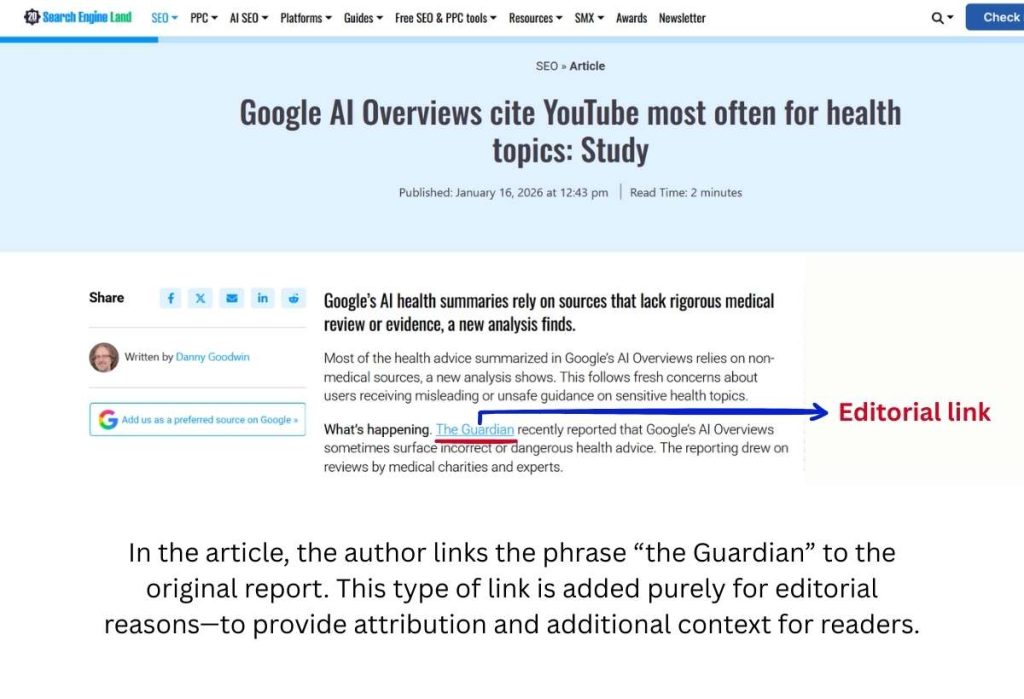
Here is an example of an editorial link.
“A writer writes an article on “2026 SEO Trends” and links to your research because it supports their point.”
What are Non-Editorial Links?
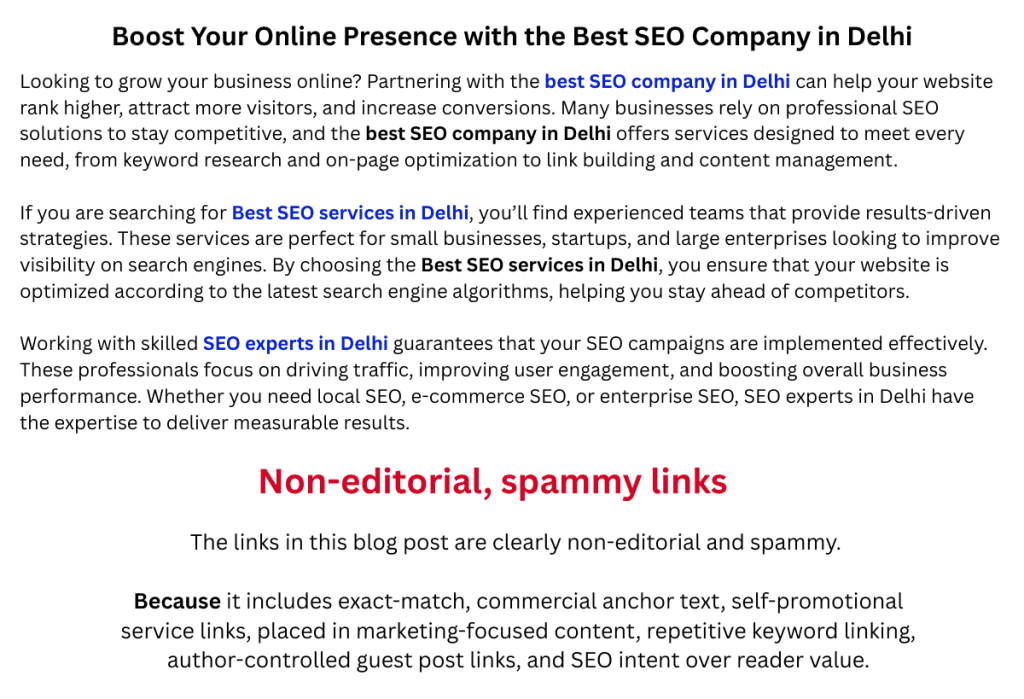
Backlinks that Google sees as manipulative are non-editorial links. In other words, these are spammy links. Here are some examples.
Please note it down that Google flags such links as spam, and these links can be a great reason why your site is not performing well.
Editorial Links vs Guest Post Links
Getting backlinks via guest posts is a common practice among many digital marketers. These are the links you get by contributing content to another website. I don’t say guest post links are bad. It can still be effective if you do it properly. However, Google is increasingly scrutinizing large-scale guest posting for link manipulation. If your links fail to meet quality link-building guidelines, you are at risk.
On the other hand, editorial links:
For long-term SEO in 2026, editorial links are significantly more powerful and a much safer strategy compared to guest post links.
Editorial Links vs Paid Links
Not all paid links are bad, but they must be properly marked with nofollow or sponsored attributes. Google’s link spam detection systems have been smart and more advanced. They can easily identify unnatural paid links.
How Google identifies non-editorial or paid links—you might have this in mind. The first thing you need to know is that Google doesn’t need a receipt to know whether a link was bought, traded, or demanded. Instead, it looks for patterns, signals, and context.
Editorial links stand out because they:
Even with Google’s continued efforts to combat manipulative link practices in 2026, editorial links remain among the most secure and reliable types of backlinks.
What Parameters Suggest a Link is Not Editorial?
Here are the main parameters (used by Google algorithms + manual reviewers) that suggest a link is not editorial
Unnatural Anchor Text Patterns
Over-optimized exact-match anchors are the #1 signal of manipulative links.
For example: “Best SEO Agency in Delhi”
You will see it used repeatedly across many sites.
Why does it look bought?
Because natural links usually use brand names, URLs, or partial anchors rather than commercial keywords.
Irrelevant Website Context
If the linking website has nothing to do with the topic, it looks like it was purchased.
For example, a fashion blog linking to a moving company website.
Google checks niche relevance, topical alignment, and audience match. If the link you get is from an irrelevant context, it is definitely suspicious.
Low-Quality Sites with No Real Audience
Paid links often come from PBNs (Private Blog Networks), link farms, low-traffic blogs, and sites publishing anything for a fee. How can you identify these sites? The top signals are thin content, duplicate articles, no social engagement, many outbound links, and many topics with no specialization.
Link Placement Looks Forced
Here is another pattern Google can easily detect.
Bought links often appear mid-paragraph without context, with irrelevant surrounding text, and repeated unnaturally.
On the other hand, editorial links integrate smoothly into the content.
“Insertions” into Old Articles or Posts
It is a common paid-link strategy: buying link insertions in old posts to appear natural. But this is also a known spam pattern.
When Google sees a sudden new outbound link in an old article, especially with no update to the text around it, and the anchor text is overly optimized, it doesn’t show mercy.
Sudden Spike in Links from Similar Sites
Bought links often come in batches from sites on the same IP range, similar templates, and the same kind of guest-post blogs. Google is smart enough to detect link network footprints.
Sponsored Posts without Proper Tags
Paid guest posts should use rel= “sponsored” or rel= “nofollow”. If your post is clearly promotional but uses a dofollow link, it is suspicious. Common footprints that Google can identify include “Write for us” sites selling placements and obvious advertorial tone.
Reciprocal or 3-Way Link Trades
Google looks at link graphs. Patterns that indicate link swapping:
These are artificial patterns that are usually not seen in organic editorial links.
Link-to-Content Ratio
If a page has too many outgoing links, especially to unrelated websites, it is a strong sign of link selling.
Relevant Links but Still Spammy
A link can be topically relevant and still bought (spammy).
For examples:
Remember that relevance alone doesn’t make a link natural.
What are the Benefits of Editorial Links?
Editorial links provide advantages that extend beyond traditional SEO metrics. Here are some of the fundamental benefits of editorial links that are driving their success in 2026.
Increased SEO Benefits & Ranking Improvements
Because editorial links come from relevant, authoritative sources, they pass high-quality link equity and a stronger authority signal to Google about the content. Therefore, Google considers them good indicators that your content merits ranking.
The fact that these links are contextual, natural, and come from a relevant source gives them the potential to:
Editorial links will continue to provide value to your SEO for years, unlike other types of link-building tactics that are short-lived.
Editorial Links Strengthen E-E-A-T Signals
In 2026, Google’s E-E-A-T framework (Experience, Expertise, Authoritativeness, Trustworthiness) is an important ranking factor, especially for competitive and informational queries. Editorially earned links are important for enhancing the E-E-A-T signal in the following way.
When you receive editorial links from trusted sites, it is a strong indication to Google that your content is trustworthy and credible.
Higher Referral Traffic Quality
Editorial links are placed within meaningful content, surrounded by context. They are not placed in footers or sidebars. This is a huge benefit for users because they are interested in your content and are thoughtful about clicking the link.
Editorial links, thus, are beneficial because they generate:
Long-Term SEO Stability
The long-term stability of SEO results from how often things evolve in the world of search. For example, we see a trend toward shortcut links becoming less common. As a result, we see the trend of natural, relevant, and editorially earned links.
Because of this, editorial links as a whole tend to hold their value through algorithm updates. The ability of editorial links to remain relevant after ongoing core updates makes them extremely valuable.
Brand Authority and Visibility
Authoritative sites linking back to your content will also have a long-term impact on your brand beyond SEO. Editorial links help:
There is a very close link between brand authority and search performance, making editorial links extremely valuable.
What Content Attracts Editorial Links?
Not all content will receive links as an editorial link. The truth is that most content, especially generic AI-generated content, will not receive any links unless you purchase. And you know better paid links are spammy, not editorial.
The following types of links are effective and still work in 2026.
Original Research and Data
Unique (original) data is among the best and most consistent methods of receiving editorial links. Here are some examples.
Journalists and bloggers frequently link to original data to strengthen their own content.
Expert Opinions and Thought Leadership
Editorial links typically come from articles containing experts’ views and opinions. This can include:
As we move forward into 2026, the importance of expertise will continue to rise as AI-generated opinions are becoming commonplace.
In-Depth Guides and Resources
If you create comprehensive guides and other resources on your own website, they will have a high chance of becoming “reference content”. And that content will attract others to link to it over time. Here are some examples of comprehensive guides:
Most importantly, depth, clarity, and usefulness are the keys to producing good reference material.
Newsworthy and Timely Content
Timely or news-oriented content that captures the latest updates, trends, or developments within an industry tends to receive considerable attention from editors. Here are some examples of timely news-oriented content that you can consider creating.
Combining both timeliness and insight often leads to natural mentions of articles by editors and other readers.
Why AI-Generated Content Alone Rarely Earns Editorial Links
In 2026, AI-generated content is everywhere. The problem with this content is that it looks the same because AI systems extract information from already available sources. Therefore, editors and content creators are less likely to link to generic articles that lack originality.
Of course, you can use AI in content generation, but wisely. AI tools can help you with:
However, most articles or content that earn editorial links generally include:
If you want AI-assisted content to be successful in earning high-quality editorial links, your content must be human-enhanced with additional elements and original insights.
How You Can Get (Earn) Editorial Links in 2026
Here are some best practices for earning editorial links in 2026.
Create Linkable Assets
Linkable assets refer to any content that is created specifically to attract links. According to Mailchimp, it is a smart link-building strategy. In 2026, creating likable content has been one of the best SEO practices to rank higher in search engines and AI platforms. Some examples of linkable content are as follows:
All of these linkable assets can provide reasons for other websites to link to you without being asked.
Digital PR and Media Outreach
While Digital PR is one of the most frequently used strategies to earn links in 2026, it continues to evolve, just like any other type of strategy. Here is what works now.
When creating a pitch, consider the fact that journalists want credible experts who can provide value. Therefore, avoid pitching something promotional.
Turn Brand Mentions into Editorial Links
An effortless way to earn editorial links is by converting mentions of your brand (or product(s) or content) into editorial links. Here is how it works:
Most of the time, editors will be happy to provide the link because you are already being mentioned within their articles.
Publish Content Worth Citing
To determine if a piece of content is citable, ask yourself:
“Would a person feel comfortable linking to your resource in their own article?”
If the answer is “no”, then the resource will not get any type of editorial link.
Here is what things you should focus on:
In 2026, a citable resource will be an advantage in the competitive marketplace.
Strategic, Ethical Outreach
Even though editorial links are generally obtained organically, outreach can also be effective. All you need to do is do it in moderation. Here are the best practices for doing outreach.
The goal of outreach is to raise awareness, not to manipulate.
Build Real Industry Relationships
I believe that building genuine relationships is more effective for earning editorial links than just relying on tactics. So, you must avoid tactics to build backlinks. Instead, you should focus on creating high-quality content and building relationships so that you earn backlinks naturally from authority websites. Respona also talks about how building relationships with bloggers, influencers, editors, and journalists can help website owners earn editorial links.
And you can develop relationships in the following ways.
Over time, this organic approach to building those relationships will provide you with links and mentions.
Final Words: Are Editorial Links Worth the Effort?
There are two things happening in the search industry: AI-generated content is everywhere on the web, and Google is prioritizing trust and expertise to determine whether a website is genuinely authentic.
In modern SEO, people are not just asking: Are editorial links really helpful? They are asking: Are they worth the time and effort compared to other link-building tactics? And the answers are absolutely YES.
There are several types of backlinks (e.g., self-published guest posts or paid backlinks). But the editorial links remain among the most reliable, high-impact, and sustainable types of backlinks available.
The only thing you need to do is be patient. Because earning editorial links takes time. But the reward is GREAT. You have a portfolio of editorial links positioning your website as a trusted authority in your niche.
So yes, editorial links are worth the time and effort. If you focus on quality, relevance, and trust, not only will you see improved rankings today, but also in the years to come.